St Giles’ Centre shares Teacher Voice Survey research at Brighton conference

Tania ap Sion and Libby Jones from the St Giles’ Centre, Wrexham and Lincoln Bishop University attended the British Educational Research Association’s (BERA) conference at the University of Sussex, Brighton (9-11 September 2025), where they gave a presentation on the first findings of the national Teacher Voice Survey: Religion, Values and Ethics (RVE) in the Curriculum for Wales.

This is their second international conference presentation on the Teacher Voice Survey – with the first being given at the Conference of the the International Seminar on Religious Education and Values in Riga, Latvia (28 July – 1 August).

In addition to Tania and Libby, the project team includes: Rachel Samuel (Neath Port Talbot Education Support), Paula Webber (Cardiff Metropolitan University), and Alice Parry (Llanishen High School, Cardiff).

Why is this research needed?

Until recently, statutory Religious Education in Wales largely shared the same legislative framework as Religious Education in England, although clearly differentiated Welsh and English education systems became increasingly visible across three decades when responsibilities for education and training were devolved to Wales. The latest curriculum review in Wales has seen the implementation of the radically new Curriculum for Wales in 2022 for all learners from ages three to sixteen, enabled through the passing of the Curriculum and Assessment (Wales) Act 2021.

Radical features of the new curriculum include: an integrated approach to learning and teaching in which Religious Education (renamed Religion, Values and Ethics) is for the first time legally embedded in the curriculum; and the principle of subsidiarity with a shift of responsibility for curriculum design, progression and assessment to individual education settings, giving teachers new professional autonomy.

At the beginning of a period of great change for religious education teachers in Wales, this research study aims to capture a ‘snapshot’ of teachers’ experience of and engagement with curriculum change through an exploratory qualitative survey of teachers across Wales. Invited participants included teachers from Nursery, Primary, Secondary, All-age School, Special, and PRU schools and settings.

What does the survey explore?

Using an inductive analytical approach , research findings will provide insight into teachers’:

  • attitudes towards Religion, Values and Ethics within the Curriculum for Wales;
  • approaches to curriculum design and collaborative working;
  • experiences of professional agency;
  • understanding of the Curriculum’s vision and values;
  • confidence levels and challenges;
  • hopes for the future.

Plans for the future

A full research report will be published bilingually early in the spring term 2026, and made publicly available on the St Giles’ Centre website and the Wales Association of SACRE’s website.

It is hoped that the findings will support professional dialogue and will inform professional learning at both local and national levels.

Relationships between technology and religious education

Across Europe, more or less simultaneously, the Covid-19 pandemic accelerated (and stimulated) the use and development of technology in education settings, as new ways of teaching and learning had to be created in response to practical constraints introduced by temporary school closures. Although a sizeable body of research has examined this phenomenon from a range of perspectives in education, considerably less research has been conducted in the context of religious education.

The St Giles’ Centre has recently contributed to the research and publication of a new study, which aims to listen to 16 RE professionals in Europe (including Wales) as they reflect upon and critically consider their experiences of technology during the pandemic and its implications for both present and future RE.

Content analyses identified eight inter-related areas of interest and concern for participants, which include technology and RE, alongside wellbeing, life questions, understanding RE, teachers’ situation, relationships, social aspects and wider context. Results show that the RE professionals held strong views about the use of technology in RE, including the challenges and opportunities presented in comparison with in-person teaching practices. Four areas of particular interest emerge, which are concerned with the effects of technology on relationships; technology’s potential for teaching and learning; RE professionals’ attitudes towards technology; and RE professionals’ (un)changed understandings of RE.

The article entitled: “Listening to the voices of Religious Education professionals: the relationship between technology and Religious Education” is part of a special issue of the British Journal of Religious Education, which focusses on integrating technology in religious and moral education.

Article reference:

ap Siôn, T. Cullen, S., Danner, S., Kappelhoff, B., & Kodácsy-Simon, E. (12 August 2025, online). Listening to the voices of Religious Education professionals: the relationship between technology and Religious Education. British Journal of Religious Education. https://doi.org/10.1080/01416200.2025.2543881

For more information:

Cysylltwch â ni at the St Giles’ Centre if you want more information about the project and the findings.

This research is part of the What Covid Reveals to RE Specialists project.

Beth am siarad am wneud cynnydd o fewn CGM - Dysgu proffesiynol am ddim ar gyfer ysgolion a lleoliadau Wrecsam

Mae Canolfan St Giles yn cynnig digwyddiad hyfforddi diwrnod cyfan am ddim i ymarferwyr cynradd yn Wrecsam ar gynnydd o fewn Crefydd, Gwerthoedd a Moeseg (CGM). Bydd y digwyddiad yn cael ei gynnal yng Ngwesty'r Ramada Plaza, Wrecsam ar Ddydd Iau, 3 Gorffennaf 2025 (Taflen ynghlwm). Bydd y digwyddiad yn cynnig cyfle i ymarferwyr gymryd rhan mewn deialog broffesiynol gyda chydweithwyr ac arbenigwyr, rhannu syniadau, cael adnoddau defnyddiol, ac ystyried sut siâp allai fod ar gynnydd o fewn CGM o ran eu dysgwyr eu hunain.

I gadw lle cliciwch ar y ddolen hon:

https://forms.office.com/e/j7tC6i2ut1

Taflen y digwyddiad:

Fersiwn Cymraeg o Gylchgrawn Heriol Materion Crefyddol

Welsh version of Challenging Religious Issues 21

Mae fersiwn Cymraeg y cylchgrawn poblogaidd Lefel A, Herio Materion Crefyddol, wedi'i gyhoeddi ar wefan Canolfan San Silen. (Cyhoeddwyd y fersiwn Saesneg ym mis Tachwedd.)

Mae Rhifyn 21 yn cynnwys naw erthygl wreiddiol a ysgrifennwyd gan arbenigwyr pwnc o brifysgolion yn y DU, UDA ac Awstria. Mae erthyglau'n cynnwys:

Pa Gwestiynau Allwn Ni Ofyn am Naratifau Geni Iesu?
gan Jane Heath

Astudio’r Efengylau: Dull Sefyllfaol
gan James M. M. Francis

Crefydd a Hanes
gan William K. Kay

Moeseg a’r Argyfwng Hinsawdd
gan Robert Song

‘Yng Nghanol Bywyd yr ydym mewn Angau’: Safbwyntiau Cristnogol ar Ystyr Marwolaeth a Bywyd yn y Ddadl ar Gymorth i Farw
gan Sam Hole

Ar ôl Anselm: Sant Bonaventure ac Ail-greu y Ddadl Ontolegol
gan William Crozier

Gwragedd Ffyddlon a Duwiesau Ffyrnig: Agweddau Hindŵaidd Tuag at Fenywod
gan Steven Jacobs

Ai rhywbeth Pesimistaidd yw Bwdhaeth?
gan Phra Nicholas Thanissaro

Cydraddoldeb Rhywedd mewn Islam: Posibiliadau a Chyfyngiadau
gan Shama Ajoubi a Fariza Bisaeva

Gallwch ddarllen y cyhoeddiad Cymraeg a Saesneg isod.

I ddarllen rhifynnau eraill yn y cylchgrawn, ewch i'n tudalen cylchgrawn..

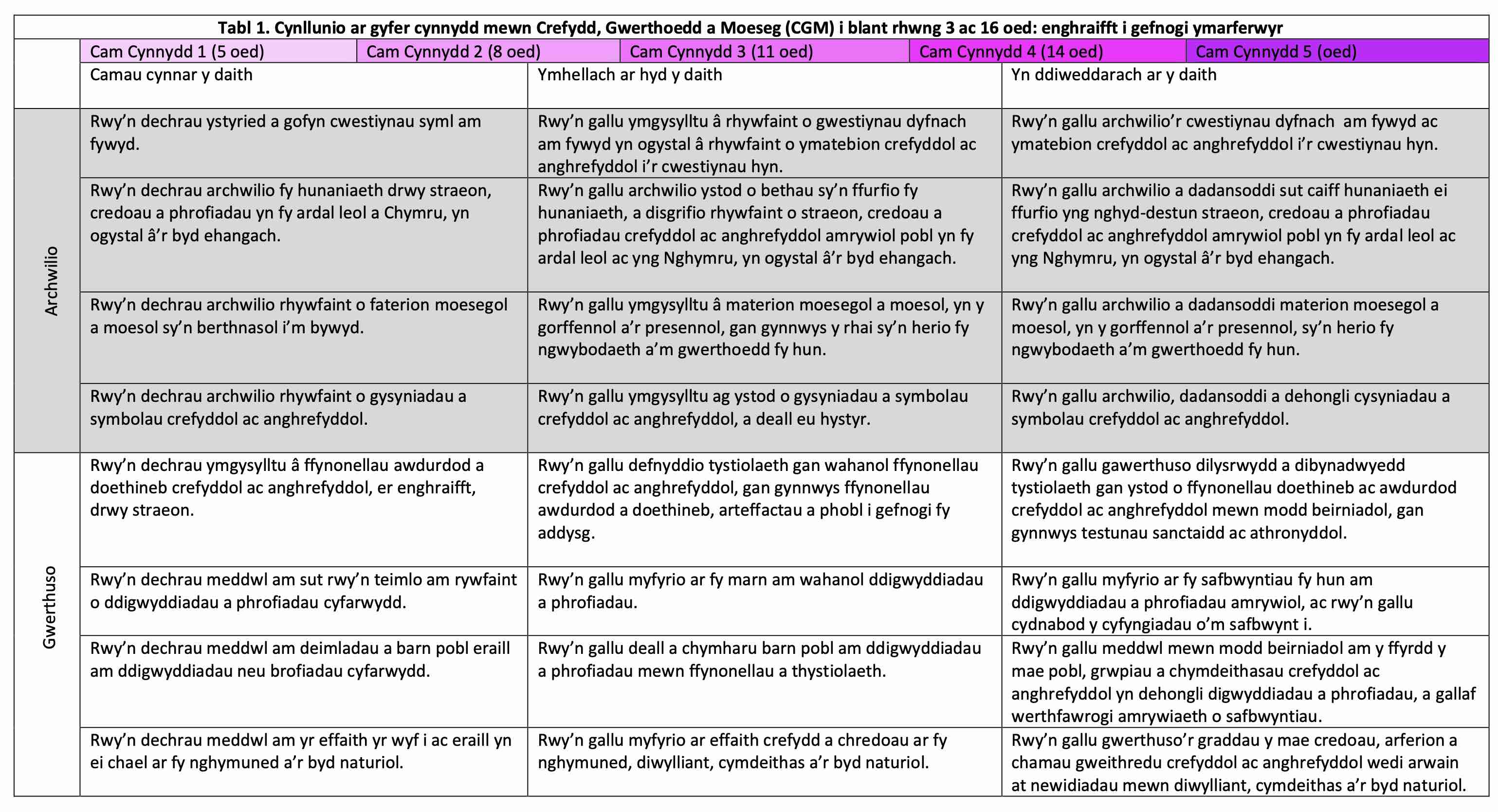
Cynllunio ar gyfer cynnydd yn RVE (3-16): adnodd newydd

Adnodd cynllunio ar gyfer cynnydd

Mae Canolfan San Silyn wedi cyhoeddi Cynllunio ar gyfer cynnydd mewn Crefydd, Gwerthoedd a Moeseg (CGM) i blant rhwng 3 ac 16 oed: enghraifft i gefnogi ymarferwyr. Crëwyd yr enghraifft mewn partneriaeth â Thîm Addysg Esgobaeth Llanelwy mewn cydweithrediad â phump ysgolion cynradd yn Wrecsam.

Mae'r adnodd cynllunio ar gyfer cynnydd yn cynnwys hefyd adran i helpu ymarferwyr mewn lleoliadau meithrin i gynllunio ar gyfer CGM, cyn cam cynnydd 1. Datblygwyd hyn mewn cydweithrediad â’r arbenigwyr sy’n gweithio â lleoliadau meithrin nas cynhelir a gaiff eu hariannu ac ysgolion â darpariaeth meithrin.

Rhagwelwn y bydd ymarferwyr yn defnyddio’r sgiliau CGM a amlinellir yn yr enghraifft hon i’w harwain i werthuso sefyllfa dysgwyr a’u trywydd ar wahanol gyfnodau o’u cynnydd dysgu, yn ogystal â’u helpu i wneud penderfyniadau am gynnwys ac addysgeg CGM.

Yn yr un modd â phob adnodd, mae Canolfan San Silyn yn annog ymarferwyr i ymgysylltu â’r enghraifft hon mewn modd beirniadol. Anogir ymarferwyr hefyd i gyfathrebu â’i gilydd mewn modd proffesiynol i helpu i ddatblygu cyd-ddealltwriaeth o gynnydd mewn perthynas â CGM o fewn eu lleoliad.

Lawrlwythwch a darllenwch am yr adnodd yma.

Dweud eich dweud – Arolwg Llais yr Athrawon ar gyfer CGM

Gwahoddir athrawon ledled Cymru i gymryd rhan yn Arolwg Llais yr Athrawon ar gyfer Crefydd, Gwerthoedd a Moeseg (CGM).

Mae'r arolwg hwn wedi'i gynllunio i gael mynediad uniongyrchol at brofiadau athrawon o’r newidiadau cwricwlwm yng Nghymru a'u hymgysylltiad â nhw, gyda ffocws ar Grefydd, Gwerthoedd a Moeseg (CGM). Nod yr astudiaeth yw rhoi 'ciplun' o safbwyntiau athrawon ar CGM yn y Cwricwlwm i Gymru. Bydd hyn yn helpu i gyfrannu at ddeialog broffesiynol a lywir gan ymchwil a dysgu proffesiynol.

Pwy all gymryd rhan yn yr arolwg?

Mae'r arolwg yn agored i ymarferwyr sy'n addysgu yng Nghymru o fewn cyd-destun ysgol neu leoliad 3 i 16 oed. Mae hyn yn cynnwys athrawon yn yr ysgolion a’r lleoliadau canlynol: Meithrin, Cynradd, Uwchradd, Ysgolion Pob Oed, Arbennig, ac Unedau Cyfeirio Disgyblion.

Pwy sy'n gyfrifol am yr arolwg?

Mae’r prosiect ymchwil yn cael ei arwain gan Ganolfan San Silyn a Phrifysgol yr Esgob Grosseteste mewn cydweithrediad â staff o Brifysgol Metropolitan Caerdydd, Cymorth Addysg Castell-nedd Port Talbot, ac Ysgol Uwchradd Llanisien, Caerdydd.

Cefnogir yr ymchwil gan Gymdeithas CYSAGau / CYSau Cymru, sy'n gyfrifol am hyrwyddo'r arolwg.

Sut ydych chi'n cymryd rhan yn yr arolwg?

Efallai eich bod wedi cael gwybodaeth am yr arolwg gan eich ymgynghorydd lleol, CYSAG / CYS lleol, awdurdod lleol, consortiwm, neu esgobaeth.

Os nad ydych wedi clywed am yr arolwg eto, ac yr hoffech gymryd rhan, e-bostiwch Libby Jones (Ysgrifennydd Cynorthwyol CCYSAGauC) neu WASACRE@outlook.com, a fydd yn anfon dolen yr arolwg atoch gyda rhagor o wybodaeth.

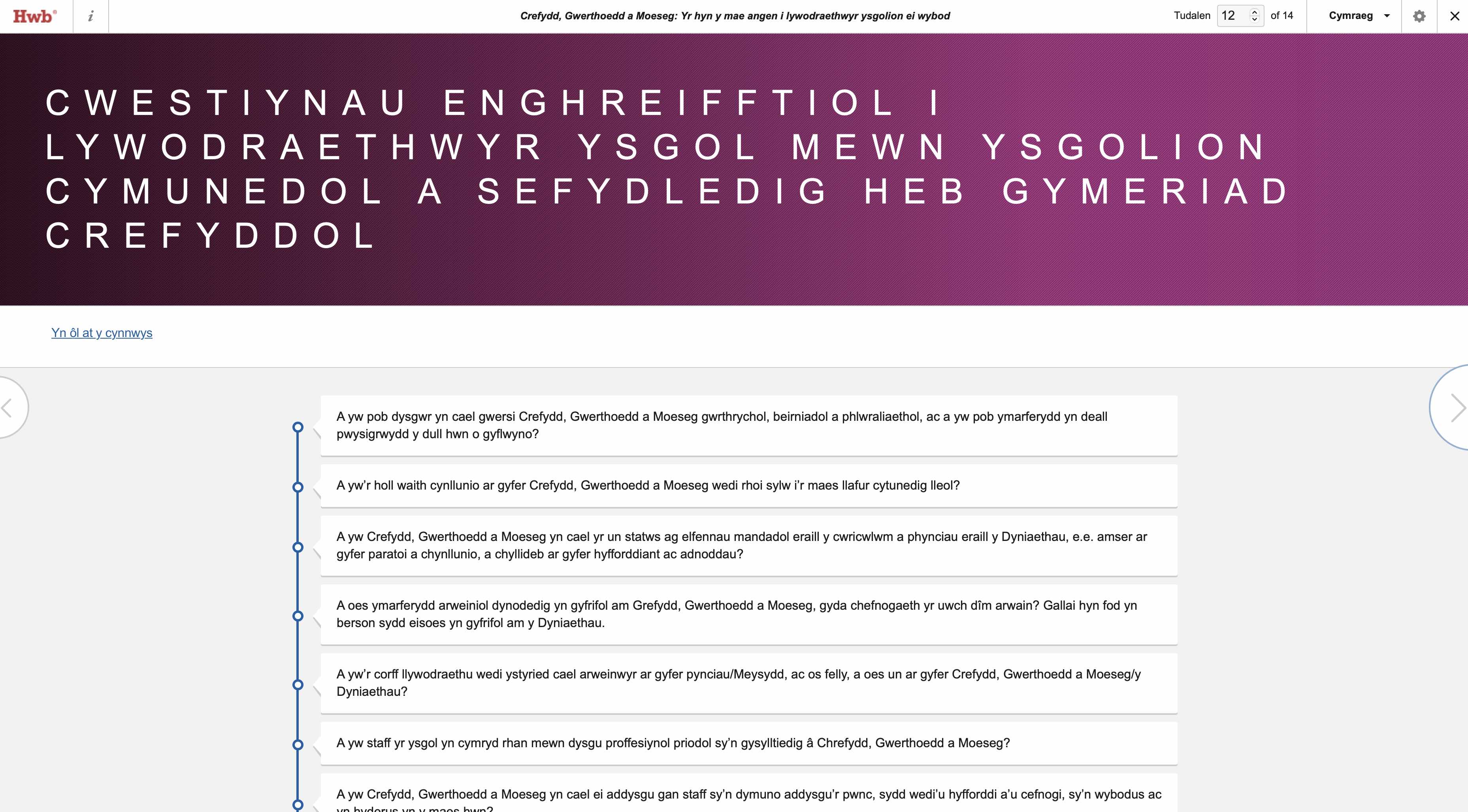
Adnodd newydd i Lywodraethwyr ysgolion Cymru

Adnodd Llywodraethwyr Ysgolion

Mae adnodd newydd i Lywodraethwyr ysgolion wedi’i gyhoeddi’n ddiweddar ar Hwb Llywodraeth Cymru.

Mae’r adnodd dwyieithog rhad ac am ddim yn cefnogi dysgu proffesiynol hanfodol mewn Crefydd, Gwerthoedd a Moeseg (CGM) ar gyfer Llywodraethwyr ysgolion, a’i enw yw:
Crefydd, Gwerthoedd a Moeseg: Yr hyn y mae angen i lywodraethwyr ysgolion ei wybod

Mae’r adnodd newydd hwn ar gael ar Hwb, a gellir dod o hyd iddo yn y gyfres bresennol o adnoddau dysgu proffesiynol ar gyfer CGM trwy ddilyn y ddolen hon:

https://hwb.gov.wales/repository/resource/eef7e399-93bb-4d7c-ab68-145c93f4c6d3/overview

Canolfan San Silyn sydd wedi bod yn gyfrifol am ddatblygu’r adnodd hwn, ac mae’n falch o weld ei fod bellach ar gael yn ehangach.

Religious leaders in Wales come together to oppose Assisted Dying Bill

Religious leaders in Wales have issued a joint statement to oppose the Assisted Dying Bill on 29 November.

The Joint Statement of Faith Leaders was posted on the Church in Wales website on 18 November and reads:

A bill has been introduced to Parliament which allows doctors to supply lethal drugs to people with an incurable illness, in effect physician-assisted suicide.

As people of faith, we share a common heritage of caring for the vulnerable, the sick and dying. This is why we feel we must speak together against the proposed legislation. Compassion is at the heart of all the great world religions. Life is sacred.

We address our message more widely, to all people of goodwill, because the proposals for physician-assisted suicide are not just contrary to the dignity and sanctity of life, they pose grave dangers to vulnerable people.

Cherishing life means building a society where every person is included and the diversity of individuals is not seen as a burden. If the Bill becomes law, the experience of countries such as Canada, Belgium and the Netherlands shows that the most vulnerable can no longer presume on the balance of healthcare being in their favour. The criteria for assisted suicide become widened to include groups of people who need society’s help, rather than assistance in ending their lives.

We raise our voices to remind legislators of the inherent dignity of every person, especially in relation to those who are disabled, elderly or vulnerable. If this Bill were to be passed, many would feel insecure about the future and conclude that they are a burden on loved ones and the health service. We must treasure and value these individuals among us.

The new Bill marks a very serious moment for our country. It raises serious questions about what sort of society we want to be. Especially of concern is whether we will continue to promote a proper care of the dying, and of those who are vulnerable through disability or age. It is good to see that those opposed to a change in the law includes a diverse group of medical professionals (especially, but not only, from the field of palliative care), disability rights organisations, researchers, carers and a range of other concerned institutions.

We urge you write to, or email, your local MP, to express your concerns about the proposed bill.

Signed:

Representing the Roman Catholic Church in Wales

Archbishop Mark O’Toole, Archbishop of Cardiff-Menevia

Bishop Peter Brignall, Bishop of Wrexham

Representing the Church in Wales

The Archbishop of Wales, Andrew John

The Bishop of St Asaph, Gregory Cameron

The Bishop of Monmouth, Cherry Vann

The Bishop of Swansea and Brecon, John Lomas

The Bishop of Llandaff, Mary Stallard

The Bishop of St Davids, Dorrien Davies

The Bishop of Bardsey, David Morris

Representing the Evangelical Alliance in Wales, Tim Rowlands

Representing the Cardiff United Synagogue, Rabbi Michoel Rose

Representing the South Wales Jewish Representative Council, Laurence Kahn

Representing the Muslim Council of Wales, Dr Abdul-Azim Ahmed

Representing the Ahmadiyya Muslim Community in Wales, Imam Usman Manan

Representing the Sikh Council of Wales, Gurmit Singh Randhawa MBE

Representing the Hindu Council of Wales, Dr Sakti Guha Niyogi

The current debate around Assisted Dying in the UK is of immediate interest to Religion, Values and Ethics practitioners, and shows the unique contribution and relevance of the subject to everyday life in Wales.

Assisted dying, Ethics and the climate crisis, and more in Challenging Religious Issues

Challenging Religious Issues 21

Issue 21 of the popular journal for A-level students and teachers has been published on the St Giles’ Centre website today. Herio Materion Crefyddol is packed once again with short articles on a whole range of issues. Find out more about Ethics and the Climate Crisis, Christian Perspectives on the Meaning of Death and Life in the Assisted Dying Debate, Hindu Attitudes towards Women, and Gender Equality in Islam as well as other informed articles.

Details of the articles are summarised below, where you will also find a link to the free journal.

Pa Gwestiynau Allwn Ni Ofyn am Naratifau Geni Iesu? gan Jane Heath

Mae pobl yn gofyn llawer o gwestiynau am yr adroddiadau am y geni yn yr Efengylau, ond dylem gymryd pwyll i geisio canolbwyntio ar y cwestiynau y gall y naratifau eu hateb. Ni allwn brofi oddi wrthynt beth a ddigwyddodd mewn gwirionedd na sut yn union y cafodd Iesu ei genhedlu, ond gallwn weld sut y cafodd Cristnogion cynnar ystyr yn y digwyddiadau a oedd wedi digwydd yn eu plith, a sut yr oedd yr ystyr hwnnw yn cyfleu iddynt ryngweithio Duw â’r byd yn ymgnawdoliad ei Fab.

Astudio’r Efengylau: Dull Sefyllfaol gan James M. M. Francis

Mae’r erthygl hon yn cyflwyno fframwaith ar gyfer astudio’r Efengylau wedi’i llywio gan fyfyrio ar hunaniaeth, ystyr a phwrpas dynol. Disgrifir y fframwaith yn fyr ac yna caiff ei gymhwyso i bob un o’r Pedair Efengyl yn y Testament Newydd. Gellir dadlau bod gweithio gyda fframwaith o’r fath yn cyfrannu at yr hyn a ddisgrifir weithiau fel gwneud diwinyddiaeth o’r gwaelod i fyny.

Crefydd a Hanes gan William K. Kay

Mae hanes crefyddol yn gangen o hanes cyffredinol, a defnyddir yr un mathau o dystiolaeth yn y ddau achos. Rhaid asio gwahanol fathau o wybodaeth am y gorffennol i wneud naratifau cydlynol a bydd y naratifau hyn yn cael eu gyrru gan athroniaethau hanes ymhlyg. Mae rhai crefyddau wedi eu gwreiddio yn llawer cryfach mewn digwyddiadau hanesyddol nag eraill, ond mae twf gwyddoniaeth ers yr 17eg ganrif OC wedi dylanwadu ar bob crefydd.

Moeseg a’r Argyfwng Hinsawdd gan Robert Song

Mae’r erthygl hon yn archwilio rhai materion canolog mewn moeseg amgylcheddol. Mae’n dechrau drwy feddwl pa gwestiynau moesegol y dylem eu gofyn mewn perthynas â’r argyfwng hinsawdd, ac yna’n ystyried pwy sy’n gyfrifol amdano. Yn olaf, mae’n gwahaniaethu rhwng optimistiaeth a gobaith, ac mae’n cynnig rhai awgrymiadau ar sut y gallem fynd ati i fyw’n fwy gobeithiol.

‘Yng Nghanol Bywyd yr ydym mewn Angau’: Safbwyntiau Cristnogol ar Ystyr Marwolaeth a Bywyd yn y Ddadl ar Gymorth i Farw gan Sam Hole

Mae’r erthygl hon yn gosod allan agweddau allweddol ar farwolaeth a marw Cristnogol, er mwyn taflu goleuni newydd ar faterion sy’n cael eu herio yn y ddadl ynghylch cymorth i farw.

Ar ôl Anselm: Sant Bonaventure ac Ail-greu y Ddadl Ontolegol gan William Crozier

Mae’r erthygl hon yn edrych ar sut y derbyniwyd dadl ontolegol Anselm ym meddwl cydweithiwr Ffransisgaidd Thomas Aquinas, Bonaventure o Bagnoregio, a’i ymdrech i’w chysoni â fersiynau o’r ddal gosmolegol.

Gwragedd Ffyddlon a Duwiesau Ffyrnig: Agweddau Hindŵaidd Tuag at Fenywod gan Steven Jacobs

Mae’r erthygl hon yn mynd i’r afael â dau bortread o fenywod sy’n ymddangos yn groes i’w gilydd. Y cyntaf yw’r syniad o’r wraig berffaith sy’n eilradd i’w gŵr. Mae stori Sītā, yn y chwedl epig y Rāmāyaṇa, yn crynhoi’r cysyniad hwn o fenywdod, sy’n dilyn ei gŵr yn ffyddlon i alltudiaeth. Fodd bynnag, mewn cyferbyniad, ceir y dduwies hynod annibynnol ac erchyll Kālī, a bortreadir fel un sy’n tramgwyddo normau cymdeithasol, yn wrthgyferbyniad i’r Sītā ymostyngol.

Ai rhywbeth Pesimistaidd yw Bwdhaeth? gan Phra Nicholas Thanissaro

Roedd ysgolheigion Gorllewinol cynnar yn cyfateb Bwdhaeth â phesimistiaeth yn bennaf oherwydd ei bod yn cynnwys ‘dioddefaint’ ymhlith y gwirioneddau ‘nobl’. Mae’r hyn y mae Bwdhyddion yn ei olygu mewn gwirionedd wrth ddioddefaint yn cael ei ddangos gan wahanol gategorïau o dukkha – sy’n cynnwys dioddefaint corfforol, dioddefaint meddyliol sy’n deillio o’r newid yn natur bodolaeth a dioddefaint sy’n gynhenid ym mlociau adeiladu bodolaeth ddynol. Er bod Bwdhaeth yn portreadu dioddefaint fel rhywbeth enbyd, mae’n cael ei hamddiffyn yn erbyn y cyhuddiad o besimistiaeth, trwy bwysleisio nodweddion cadarnhaol bodolaeth ddynol, a’r pwyslais yn y Pedwar Gwirionedd Nobl ar ddiwedd dioddefaint a’r llwybr i hyn.

Cydraddoldeb Rhywedd mewn Islam: Posibiliadau a Chyfyngiadau gan Shama Ajoubi a Fariza Bisaeva

Mae’n bwnc dadleuol beth bynnag ond mae cydraddoldeb rhywedd yn fwy fyth o bwnc llosg mewn Islam. Mae rhai yn credu bod y geiriau cydraddoldeb rhywedd Mwslimaidd yn gwrth-ddweud ei gilydd oherwydd natur batriarchaidd lem Islam. Cred eraill bod Islam eisoes wedi rhoi’r holl hawliau sydd ar gael i fenywod ac felly nad oes angen unrhyw ‘brosiectau modern’ fel cydraddoldeb rhwng y rhywiau. Mae’r ddau safbwynt eithafol yn rhannu’r un farn am Islam, sef rhywbeth statig a digyfnewid. Mae’r erthygl hon yn ceisio cyflwyno trydydd persbectif, sy’n anelu at ganolbwyntio ar ysbryd Islam pan ddaw i gydraddoldeb rhywedd ac yn gofyn y cwestiwn sut y gallai rhoi’r ysbryd yma ar waith weithio heddiw.

Read the latest issue here:

The Welsh version is available soon.

Yes, Religion, Values and Ethics really matters!

Religion, Values and Ethics Film

A short film was released on 18 November to promote the value of Religion, Values and Ethics in the Curriculum for Wales. Aimed at young people, schools, parents / guardians, and others with an interest in Religion, Values and Ethics, the film shows how Religion, Values and Ethics really is a part of everyday life in Wales.

Awen, a young girl and star of the film, takes viewers through some of her big questions which are relevant to Religion, Values and Ethics. In her words: “Exploring big questions like these helps us to think critically about our world and the people in it. At the same time, we can develop our own beliefs and values, and be prepared for life and work in this fast-changing and diverse world.”

The film has been created for the Wales Association of SACREs (WASACRE) by Fresh Gecko Productions. Libby Jones and Tania ap Siôn (Co-Directors of the St Giles’ Centre in Wrexham) were both closely involved in the development and scripting of the film, working with teacher and advisor colleagues.

The film is available on YouTube and the WASACRE On Demand Conference resources page.

Cymraeg